
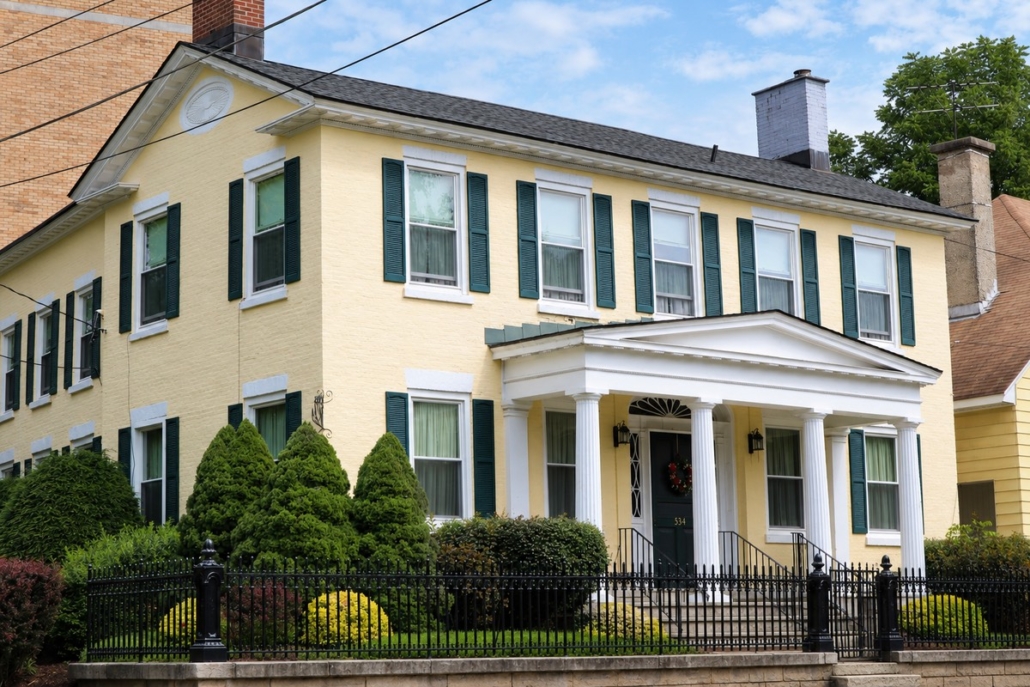
FIGURE 2.6
Nathaniel Benton Home.
Photograph © Elizabeth Spraker.
NATHANIEL BENTON HOME
534 Garden Street, Little Falls, New York
A Federal Residence with Greek Revival Enhancements
By Elizabeth Spraker
ARCHITECTURAL OVERVIEW
Imagine Garden Street during the early decades of the nineteenth century, when Little Falls was still growing beyond its earliest settlement and many of the streets familiar today were only beginning to take shape. Along this rising residential corridor, the Nathaniel Benton Home would have appeared dignified but not ostentatious—a substantial brick residence whose beauty depended upon balance, proportion, and carefully placed detail.
The front façade reflects the disciplined order associated with Federal architecture. Five evenly arranged bays extend across the two-story elevation, with the entrance positioned at the center and the windows aligned above and beside it. The design is calm and symmetrical. Nothing competes for attention, yet every opening contributes to the measured rhythm of the façade.
At the doorway, the architecture becomes more delicate. Narrow sidelights and a graceful fanlight surround the entrance, allowing daylight to enter the hall while creating one of the home’s most refined Federal details. Their slender panes soften the brick exterior and draw attention toward the center of the residence without disturbing its restrained character.
The windows are tall and simply framed, their dark shutters creating a strong contrast against the pale exterior seen today. Along the side elevation, the end gable rises above the roofline, where a circular opening adds a quiet decorative accent. The chimneys, roof, and rectangular form preserve the solid, practical character expected of a substantial early nineteenth-century home.
The entrance portico belongs to a later architectural chapter. Its broad triangular pediment and classical columns reflect the growing influence of the Greek Revival style, which became increasingly popular in the United States after the home’s original Federal form had been established. Rather than overwhelming the earlier design, the portico gives the entrance greater prominence while allowing the symmetry of the original façade to remain clearly visible.
A decorative iron fence completes the view from Garden Street. Its narrow uprights and ornamental posts create a graceful boundary between the sidewalk and the residence, framing the house without concealing it. Together, the fence, formal entrance, evenly spaced windows, and balanced proportions give the property the composed appearance it has maintained for generations.
The Nathaniel Benton Home therefore preserves two closely related architectural moments. Its original Federal form speaks through symmetry, slender detailing, and restraint, while the later Greek Revival portico adds a stronger classical presence. Neither period erases the other. Instead, they remain visible together, allowing the building itself to reveal how architectural taste changed during the nineteenth century.
LIFE WITHIN THESE WALLS
Public Duty and a Continuing Tradition of Service
1827–Present
The Nathaniel Benton Home was more than the residence of a prominent public official. It was the private setting behind a life devoted to law, government, education, and the preservation of local history. Here, the responsibilities of public service met the quieter rhythms of home—correspondence was written, visitors were received, and matters affecting Little Falls and New York State were considered beyond the formal chambers of government.
The home’s story also continued after Benton’s lifetime. In later years, its rooms served the Women’s Christian Association, allowing a residence once associated with civic leadership to enter a new chapter of community service. Although the people and purposes changed, the building remained closely connected to the life of Little Falls.
Within these walls, two distinct stories unfolded: first, the life of Nathaniel Soley Benton, whose public career helped shape the young village; and later, the work of women who carried forward a tradition of compassion and service.
NATHANIEL SOLEY BENTON (1792–1869)
Soldier, Lawyer, Statesman, Historian, and Civic Leader
Nathaniel Soley Benton’s story began far from Little Falls. Born in Hillsborough, New Hampshire, on July 11, 1792, he came of age while the United States was still a young republic, testing its institutions and defining what public service would mean for a new generation of citizens.
When war returned to the nation in 1812, Benton entered military service. That experience became the first chapter in a life repeatedly shaped by duty. The discipline and responsibility expected of a soldier would later reappear in his work as an attorney, judge, legislator, and public official.
After the war, Benton studied law under Daniel Cady, one of New York State’s respected jurists and the father of Elizabeth Cady Stanton. His legal training prepared him for more than courtroom practice. It introduced him to the workings of government and to the belief that law, when administered with fairness and sound judgment, could help bring order and stability to a growing community.
In 1819, Benton chose Little Falls as the place where he would build his career and establish his home. The village he entered was changing quickly. The Mohawk River supported commerce and industry, while construction of the Erie Canal promised to connect the region more directly with larger markets across New York State. New businesses, public institutions, and opportunities were beginning to reshape daily life.
Benton did not remain a distant observer of that transformation. As a young attorney, he became involved in the civic affairs of the village and earned the trust of its residents. When Little Falls was incorporated in 1827, he was elected its first Village President, placing him at the center of the community’s earliest organized government.
In that role, Benton helped guide a village confronting the practical demands of growth. Streets, property, commerce, public order, and local administration all required attention. His leadership came at a time when Little Falls was moving beyond its earlier frontier character and beginning to define itself as a permanent and increasingly important community within the Mohawk Valley.
Benton also became involved in the difficult questions surrounding land ownership. The influence of the Ellice Estate continued to affect the development of Little Falls, limiting opportunities for local residents to acquire and improve property. Benton supported efforts that encouraged broader ownership and greater local investment, helping create conditions under which the village could continue expanding.
His public career soon extended beyond Little Falls. Benton served as Herkimer County Judge, represented the region in the New York State Senate, and later held the office of New York Secretary of State for twelve years. He also served as United States Attorney for the Northern District of New York, Auditor of the New York State Canal Department, and second President of the Herkimer County Bank.
Those positions carried him into law, finance, transportation, and state government, yet Little Falls remained the community with which his name became most closely associated. His career reflected the confidence repeatedly placed in his judgment, but it also revealed the range of responsibilities assumed by public leaders during a period when local and state institutions were still developing.
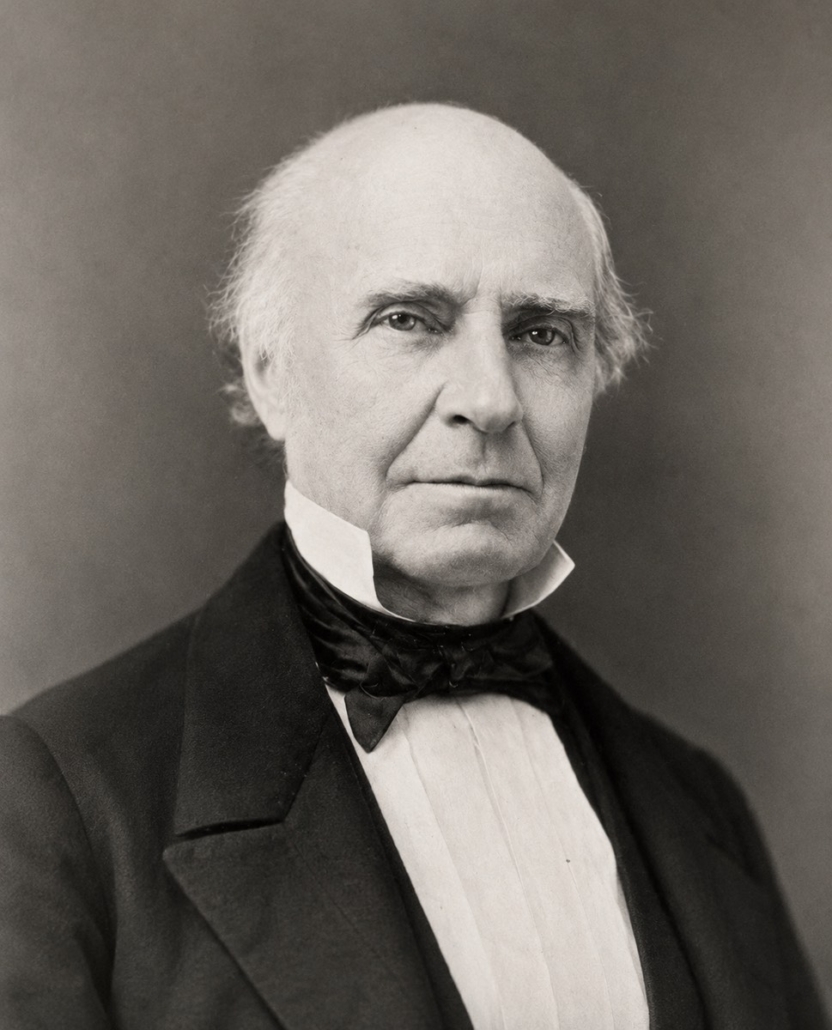
FIGURE 2.7 Judge Nathaniel Soley Benton (1792–1869).
Courtesy of the Little Falls Historical Society Museum.
Benton believed that serving a community also meant preserving its memory. He devoted years to researching the settlement of the Mohawk Valley, the families who lived there, the events of the Revolutionary era, and the institutions that shaped Herkimer County.
In 1856, he published A History of Herkimer County. The volume preserved names, events, and local traditions that might otherwise have been lost. For later historians, genealogists, and residents, his work became more than a nineteenth-century history book. It became a bridge to the lives of earlier generations.
His commitment to education was remembered long after his death. When Benton Hall Academy was established in 1895, the community honored him by placing his name upon the institution. The choice linked the school not only to a former public official, but to a man who believed that knowledge, historical awareness, and responsible leadership were essential to the strength of a community.
Benton’s memory was also preserved at Emmanuel Episcopal Church, where a stained-glass window honors his life and service.
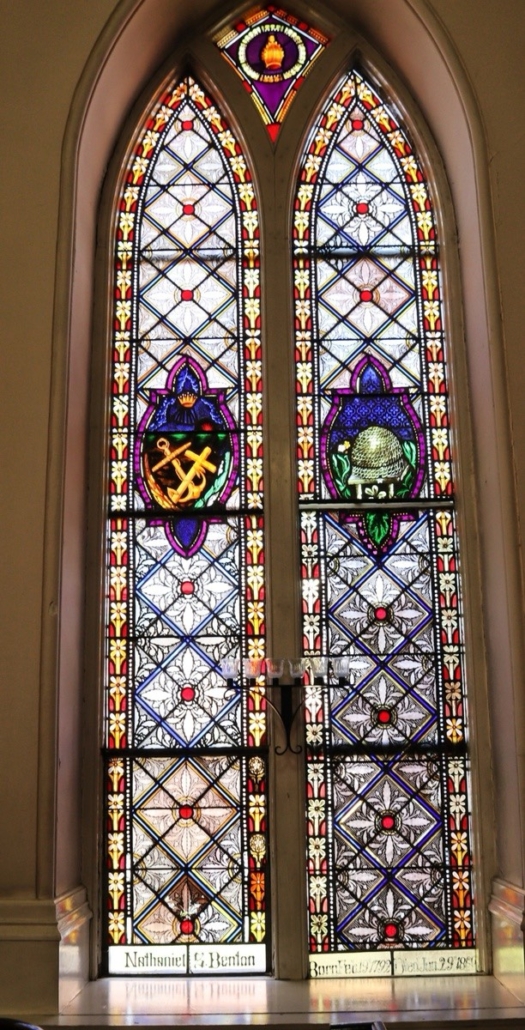
FIGURE 2.8
Nathaniel S. Benton Memorial Window.
Emmanuel Episcopal Church, Little Falls, New York.
Photograph © Elizabeth Spraker.
The memorial window bears his name and the dates of his birth and death. Its Christian symbols—including an anchor associated with hope and a sheaf of wheat suggesting the fruits of a faithful life—offer a quieter reflection upon the values for which he was remembered. The tribute honors not only the offices he held, but the character the community believed stood behind them.
His name also remains connected to Benton’s Landing, recalling the canal-era years when transportation and commerce were transforming Little Falls.
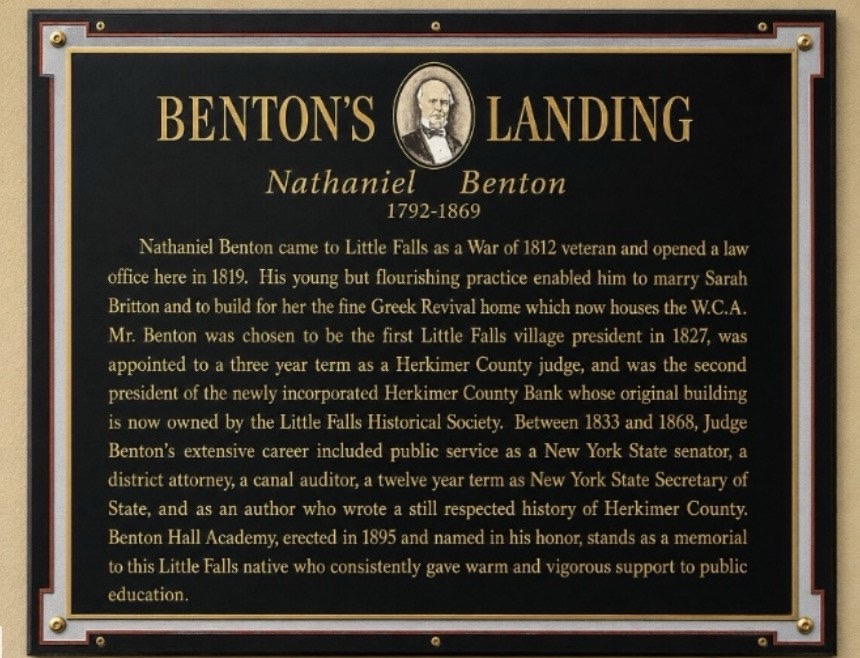
FIGURE 2.9
Benton’s Landing Historical Marker.
Photograph © Elizabeth Spraker.
The marker connects Benton to a period when canal traffic brought travelers, goods, investment, and opportunity through the Mohawk Valley. It reminds us that his life unfolded not in isolation, but amid one of the most consequential transformations in the history of Little Falls.
Benton’s public career also brought prominent visitors into his private world. In 1843, former President John Quincy Adams was received as his guest, linking the Garden Street residence for a moment to the wider political life of the nation.
Within his Garden Street home, Benton’s public and private worlds came together. The residence provided a place for family life, study, correspondence, and the conversations that accompanied a demanding career. Beyond its doors, he participated in the formation of government, law, banking, education, and historical scholarship. Within them, he returned to the community he had chosen as his own.
Nathaniel Soley Benton died in 1869, but his presence did not disappear from Little Falls. It remained in the institutions he helped guide, in the history he preserved, in the school that carried his name, in the church window created in his memory, and in the home that continues to stand along Garden Street.
THE WOMEN’S CHRISTIAN ASSOCIATION
A Home That Continued to Serve
After Nathaniel Benton’s lifetime, the residence on Garden Street began a new chapter—one that carried its long association with public responsibility into a more personal form of community service.
In 1920, Loomis, David, and Elizabeth Burrell presented the property to Little Falls in memory of their sister, Anne Louise Burrell. As the children of David H. Burrell, they belonged to a family whose industrial success and philanthropy had left a lasting mark upon the city. Their father had achieved national prominence through the development and manufacture of equipment used in cheese-making and dairy production, yet the family’s influence extended well beyond business. Through this gift, his children continued that tradition of civic generosity.
The Burrell family also provided $12,000 to prepare the former residence for its new purpose. The rooms that had once belonged to a statesman and historian were adapted to meet the needs of women seeking security, assistance, and a temporary place of refuge.
The Women’s Christian Association offered more than shelter. The house also became a gathering place for local charitable and nonprofit organizations. Within these rooms, volunteers met, discussed community needs, organized projects, and found ways to assist their neighbors. Work that may have begun quietly around a table could eventually reach families and individuals throughout Little Falls.
This was a different kind of leadership from the public service associated with Nathaniel Benton, but it was no less important. The women connected with the association served through compassion, organization, and steady attention to the needs of others. Their contributions were often made without ceremony, yet they strengthened the community in lasting ways.
The home’s purpose changed, but its connection to civic life remained. Under Benton, it had been associated with law, government, education, and historical scholarship. Under the Women’s Christian Association, it became a place of protection, cooperation, and practical care.
That tradition has endured. The building continues to provide meeting space for community organizations, allowing the former Benton residence to remain active in the life of Little Falls. Its walls therefore preserve more than the memory of one distinguished resident. They also reflect the generations of people who kept the house useful, welcoming, and open to those who needed it.
LEGACY
The Nathaniel Benton Home endures not only because of its graceful Federal form, but because generations gave those walls a continuing purpose. First associated with a life of public duty and historical preservation, the residence later became a place where women carried service into the daily life of the community.
Its story reminds us that legacy is not always preserved through monuments or public office. Sometimes it survives through the quieter work of learning, caring, remembering, and opening a door to others. Along Garden Street, the Benton Home still reflects that enduring connection between place, character, and service.
SOURCES
- Little Falls Historical Society Museum, Cooney Archives.
- East Architectural Tour. Little Falls Historical Society Museum,
- Benton, Nathaniel S. A History of Herkimer County.
- Herkimer County deed and property records.
Elizabeth Spraker is a member of the Little Falls Historical Society.
Published on August 6, 2026.
Support Mohawk Valley Today!

MVT Updates
 Beginning Farmer WebinarSeptember 16, 2026 - 10:05 am
- Historic Ringwood Manor Participates in Mohawk Valley Gives CampaignSeptember 15, 2026 - 2:32 pm


 Landscape Scene from "The Last of the Mohicans," 1827, Thomas Cole, oil on canvas, Fenimore Art Museum, Cooperstown, New York, Gift of Stephen C. Clark. N0194.1961. Photograph by Richard Walker.
Featured Events
 Image by Hartwick College
 Old Forge Library Grief Circle


















 The Gateway Theater-The Rialto | The Gateway Theater was built by a group of local businessmen in 1922, who had purchased a lot on North Ann Street, which was where an early pioneer settler, Eben Britton, had long ago operated a tannery. The theater became known as the Rialto Theatre in 1925. | Photo c. 1930
 Herkimer Home State Historic Site Annual Wreath Laying and Ceremony