
It’s Almost Time for the Scapes!!
By Nancy Noonan
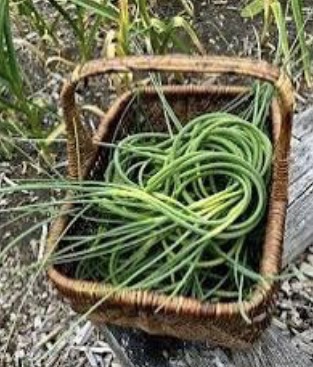
If you are growing hardneck garlic in your garden, the scapes will be ready soon. Scapes are the edible flower stalk of the garlic plant, with a texture similar to green beans or asparagus. It is important to cut the scapes after they curl, as that will send the energy back to the bulb and produce a bigger, more robust head. Don’t throw them away! Scapes are a delicacy!
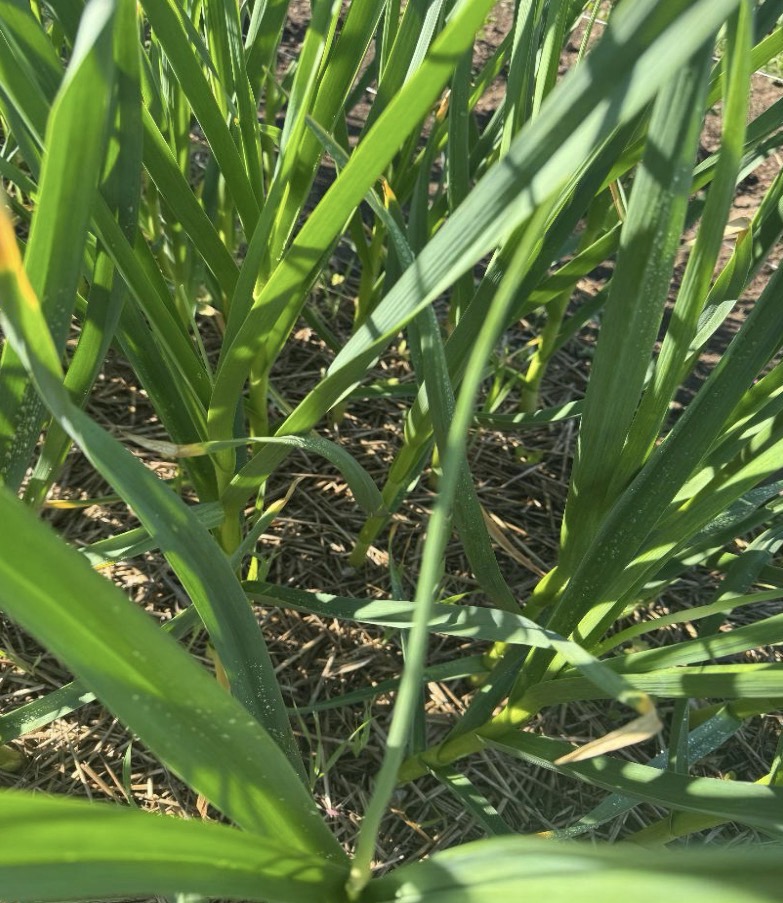
Our scapes are just starting to sprout in the middle of the plant. Wait until they start to curl before you cut them.
Here are some of our favorite ways to use scapes:
Garlic Scape Pesto
- ½ cup garlic scapes, finely chopped
- 1 tablespoon fresh lemon juice
- ½ cup olive oil
- 3 cups grated Parmesan cheese (freshly grated is best)
- Salt to taste
- Freshly cracked pepper
1. Put garlic scapes and lemon juice in a food processor, and pulse until the scapes are roughly chopped. With the food processor running or pulsing add oil through the feed tube and pulse until the oil is mixed.
2. Add ½ the Parmesan and pulse until mixed then pulse in the rest of the cheese and black pepper. You may need to add a little more olive oil to get the consistency you want. This pesto is easily frozen in soup cubes or ice cube trays to enjoy all winter long.
3. You can use this pesto everywhere! Mix it in cream cheese for a dip, serve it over pasta or sautéed green beans, and make garlic bread with it.
Source: keeneorganics.com
Garlic Scape Sea Salt
- 12 fresh garlic scapes
- ½ cup coarse sea salt (I use pink Himalayan sea salt)
1. Preheat oven to 250 F.
2. Roughly chop garlic scapes, then place in bowl of food processor along with sea salt and process until it becomes an even paste.
3. Spread the paste in an even layer on a small baking sheet. Place in oven and allow to bake for 1 hour, stirring and re-spreading in an even layer every 15 minutes, until the paste is uniformly dried.
4. Remove from the oven and allow to cool enough to handle.
5. Crumble the dried salt and garlic scape mixture into fine pieces. You can use the food processor for this to pulverize it even further.
6. Transfer the resulting garlic scape salt into jars for storage.
Source: gutsybynature.com
Garlic Scape Mustard
- 2 cups water
- 1 cup cider vinegar
- ½ cup yellow mustard seeds
- ¼ cup brown or black mustard seeds
- 1/3 cup dry mustard
- ¾ cup chopped garlic scape
- ¼ cup sugar
- ¼ cup honey
- 1 ½ tsp salt
- Fresh ground pepper
- ½ tsp turmeric
1. Chop the garlic scapes into smaller chunks. You will be blending them later so they don’t have to be uniform, just small.
2. Add chopped garlic scapes, water and some fresh ground pepper into a saucepan. Bring to a boil, then reduce and simmer for 15 minutes.
3. Remove from heat and add the mustard seeds to the water. Cover and let sit in the pot for a minimum of 2 hours of overnight (don’t refrigerate) The seeds should absorb most of the water.
4. Using an immersion blender, blend the mustard seed and garlic scape mixture until you have a watery paste. It will thicken as you blend, but shouldn’t become a true paste.
5. Add the vinegar to the paste. Whisk in the dry sugar and honey. Pour it into jars and either can it for longer storage or let it cool and put it in the fridge.
6. To can it, use ½ pint jars. Fill to ¼ inch headspace. Debubble, then process in a boiling water bath or steam canner for 15 minutes.
7. Leave it alone for a few days as it needs time to mellow out.
It’s a short season, but a great one! Scapes are also good grilled, sautéed, and made into dilly garlic scapes. They also keep really well in the produce drawer of your refrigerator.
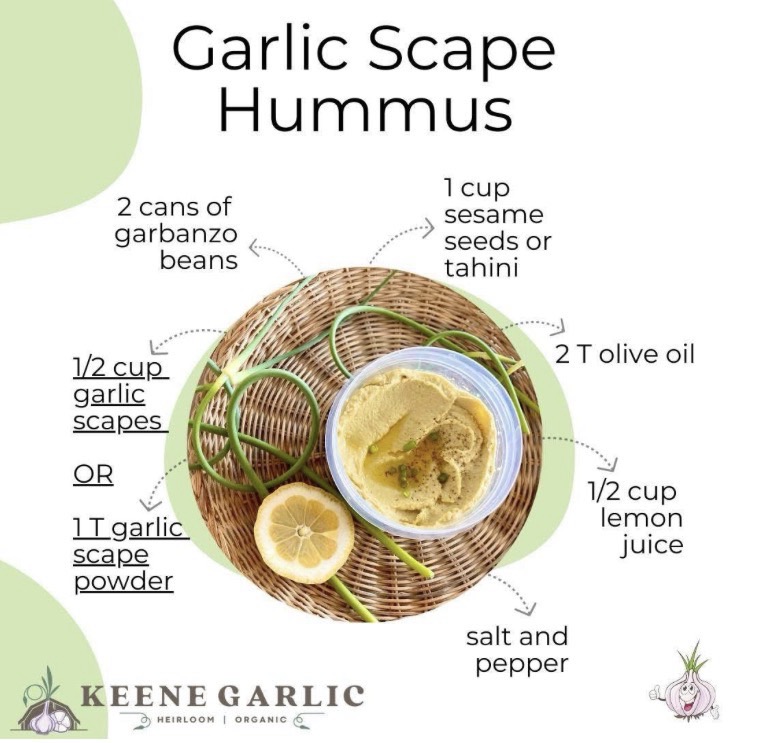
Garlic Scape Hummus Recipe from Keene Garlic (https://keeneorganics.com/)
Nancy Noonan is a Cornell Cooperative Extension Herkimer County Master Gardener Volunteer. Visit CCE Herkimer County to learn more about the Master Gardener Volunteer and Master Food Preserver programs.
Homegrown in Herkimer County began as an idea during CCE Herkimer County Master Gardener Volunteer sessions to help get the word out about the local produce available, where to get it, how to grow it, and how to enjoy it on the table.
Published on June 11, 2026.
Support Mohawk Valley Today!

MVT Updates
 City of Amsterdam Recognizes Local Food Pantries for their Invaluable ServiceOctober 13, 2026 - 8:05 am
- Indigenous Peoples’ Day gathering to feature Fidel Moreno at Hartwick’s Pine LakeOctober 12, 2026 - 8:23 am
- Mohawk Valley Featured Weekend EventsOctober 9, 2026 - 8:45 am


Featured Events
 Image by Hartwick College
 Old Forge Library Grief Circle














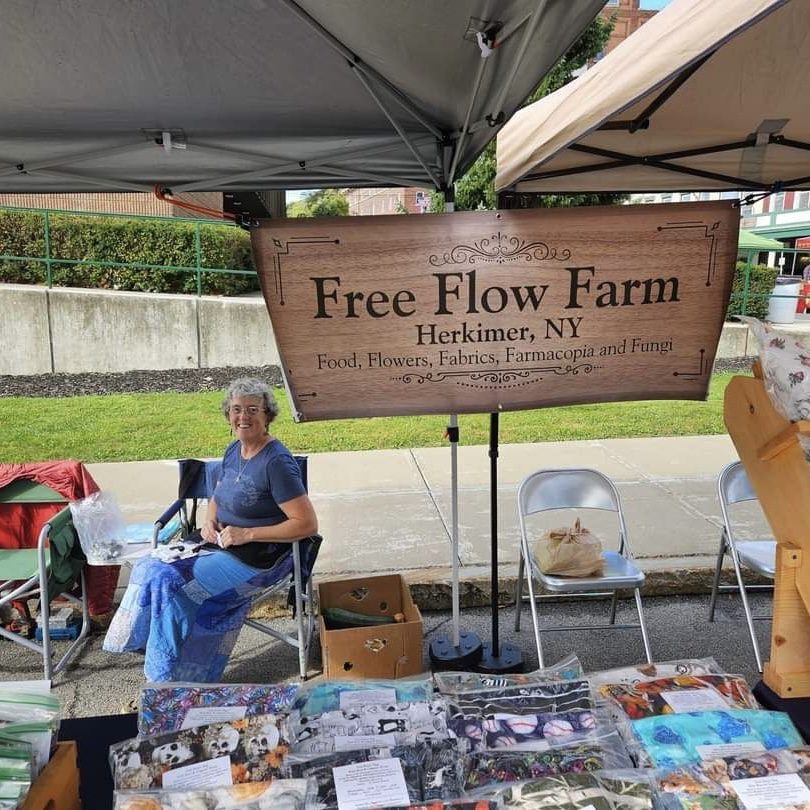

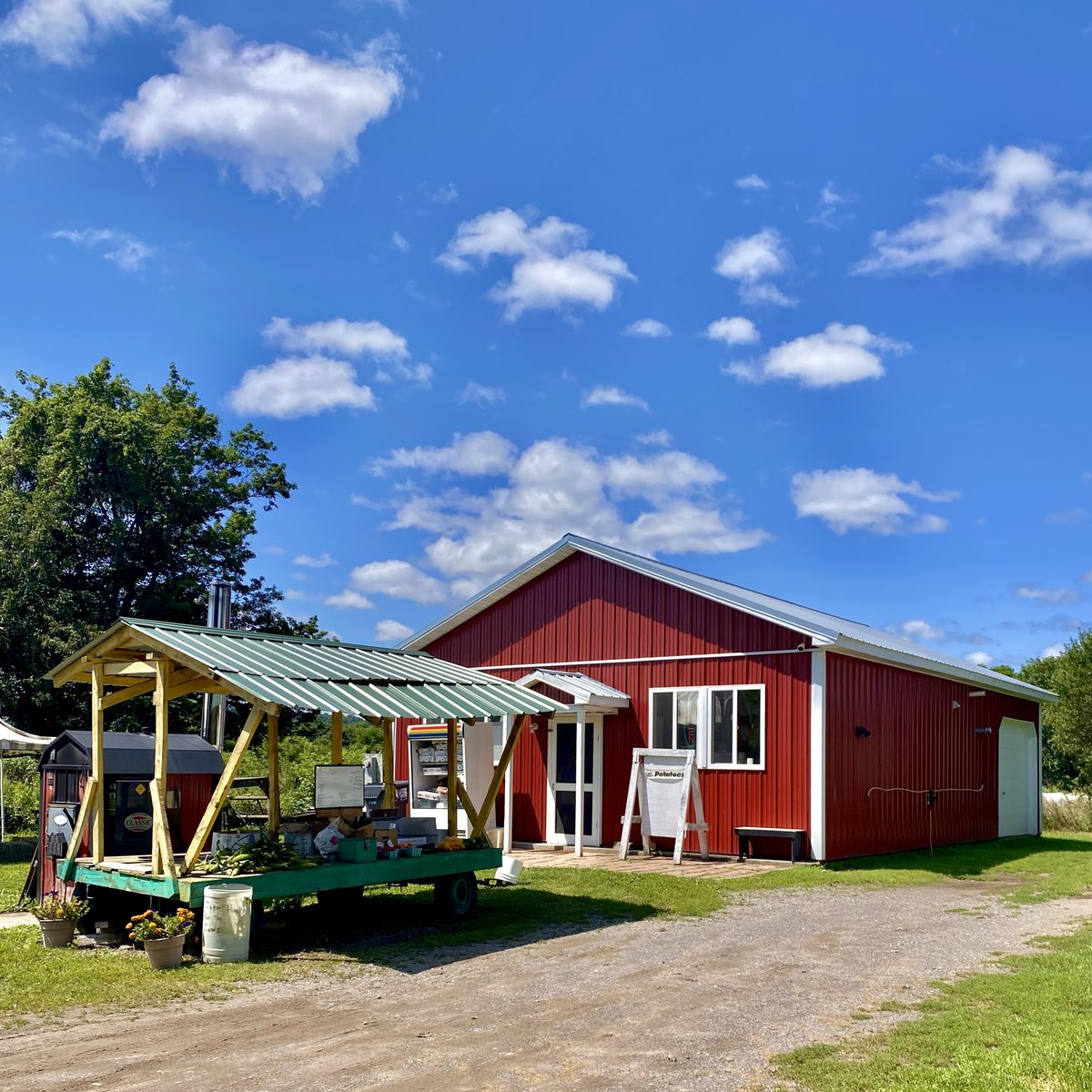


 Image by Fulton County Regional Chamber of Commerce
 Herkimer College. Photo courtesy of Herkimer College Facebook.