
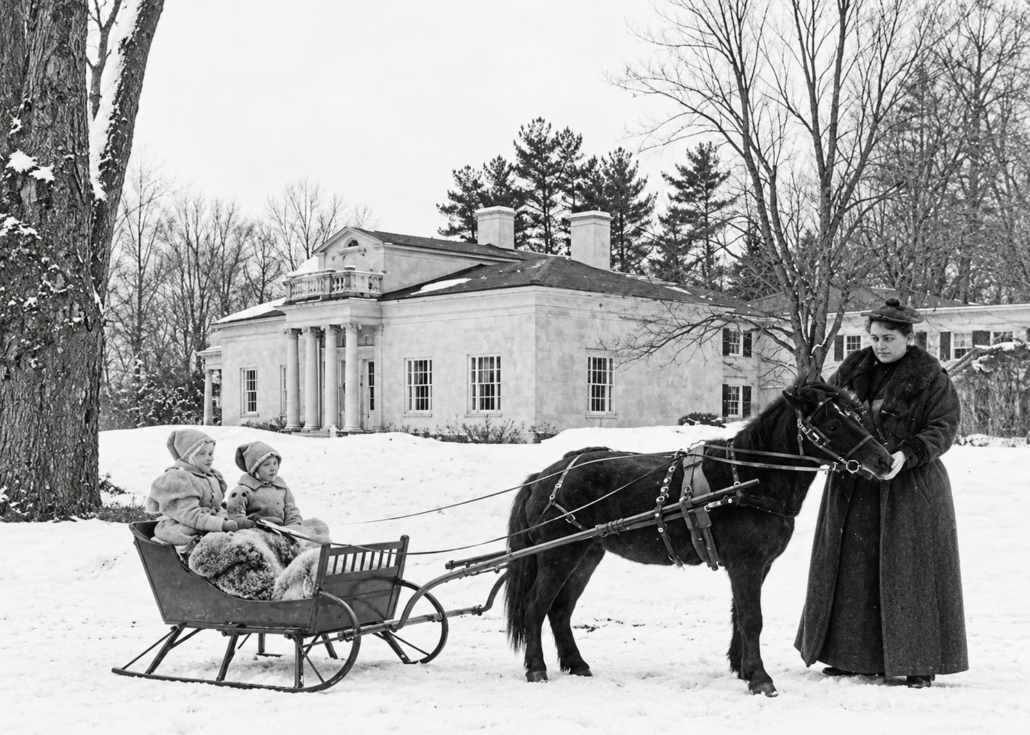
A Vision of Christmas at Historic Hyde Hall
Victorian Candlelight Christmas Tours return this December
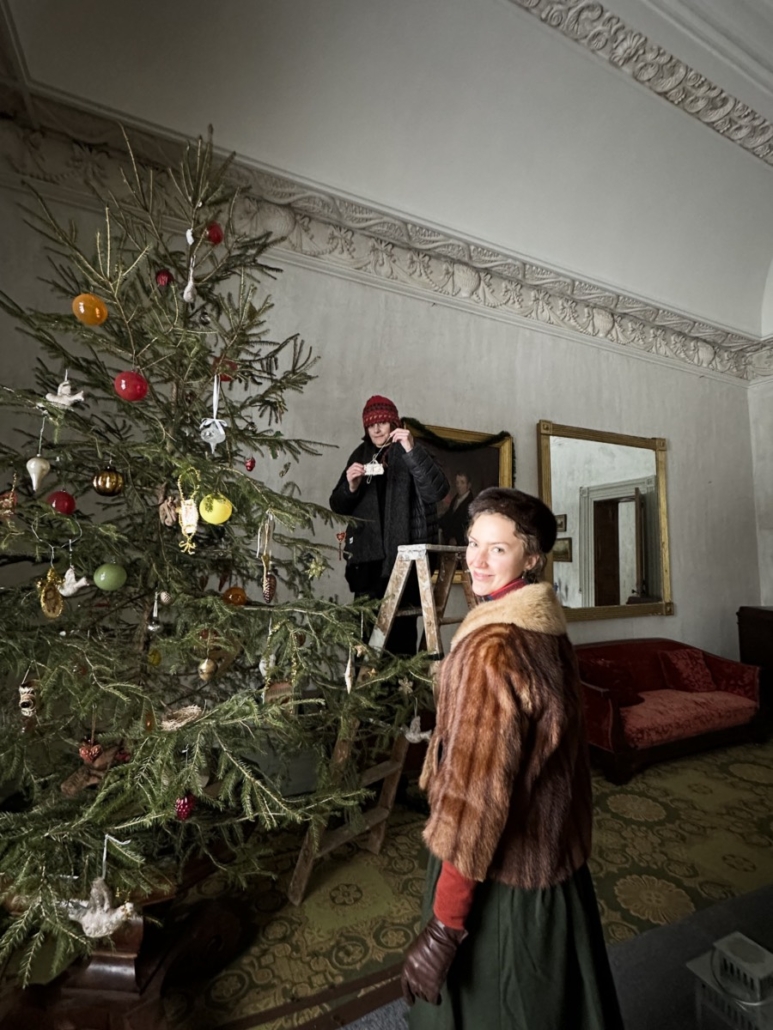
Cooperstown, New York – Historic Hyde Hall invites the public to step back into a Victorian Christmas with Candlelight Christmas Tours this December 11th, 12th, and 13th. During these guided visits, guests will explore the candlelit mansion adorned with lush greenery while learning about historical holiday customs.
Christmas traditions can feel timeless, but for Hyde Hall’s builder, George Clarke, celebrating Christmas in 1820s America looked very different from the holiday we know today.
Hyde Hall Executive Director Jon Maney said many of the Christmas traditions we recognize today gained popularity through Queen Victoria and her German-born husband, Prince Albert. “Albert brought English audiences traditions from his homeland, including evergreen boughs, kugels, and the Tannenbaum, or Christmas tree,” said Maney.
When an illustration of the royal family gathered around their candlelit Christmas tree appeared in the Illustrated London News in 1848, British readers were captivated. Said Maney, “Within years, Christmas trees had become fashionable in English homes and spread throughout the British Empire and English-speaking world. By the time President Franklin Pierce displayed a Christmas tree in the White House in 1856, the tradition had taken root in American culture.”
The modern Santa Claus also took shape in the mid-19th century. Thomas Nast’s “Santa Claus in Camp,” published on the cover of Harper’s Weekly in 1862, drew on European St. Nicholas traditions and German folk imagery. The illustration showed Santa arriving at a Union army camp to bring gifts to soldiers, helping connect troops far from home with the families and traditions they were fighting to protect. Nast’s work helped cement the familiar image of Jolly Old St. Nick in American culture.
By the time the third generation of the Clarke family was living at Hyde Hall, Christmas was far more reminiscent of the holiday we celebrate today. During the late Victorian era, George Clarke and his wife, Mary Gale, invited families from their tenant farms to the mansion each year and gave a gift to every child. A list of Mary Gale’s 1888 purchases survives, including a tin dog, horse and rider, pocket knives, checkerboards, dolls, rattles, and more.
The Victorian Candlelight Christmas Tours invite visitors to experience the holiday season as it was celebrated in the late 19th century, in all its splendor. Events Manager Verna Everitt said this year’s tours will feature costumed reenactments of historical figures and beautifully appointed period decorations.
“Through engaging storytelling, guests will discover how the Industrial Revolution transformed Christmas, making toys and greeting cards more widely available through mass production and expanding opportunities for families to travel by train to celebrate together,” Everitt said. “More than a holiday tour, this is an opportunity to step into another time and discover how Christmas became the celebration we know today.”
Tours begin at 4:30, 5, 5:30, and 6 p.m. and last one hour. Tickets are $25 per person. Please visit Hyde Hall’s website at www.hydehall.org/upcoming-events to reserve your spot today.
About Hyde Hall
Built between 1817 and 1834 for George Clarke and designed by Albany architect Philip Hooker, Hyde Hall is one of the most thoroughly documented buildings in America. It retains approximately 70 percent of its original furnishings and restored early 19th-century technology, including the only fully operational vapor-light chandeliers from the period in the country.
Published on November 19, 2026.
Support Mohawk Valley Today!

MVT Updates
 A Vision of Christmas at Historic Hyde HallNovember 19, 2026 - 8:34 am
 Image by The Rice Homestead35th Annual Christmas Open House at Rice HomesteadNovember 18, 2026 - 8:50 am
 Image by The Rice Homestead
 Downtown Gloversville, Photo from Downtown Gloversville Facebook page.
Featured Events

 Parker F. Scripture Botanical Gardens located at the CCE Oneida County Office














 Image by The Rice Homestead