

Your Bucket List: A Road Map for Life Satisfaction
By Cheyenne Dorsagno
“Kicking the bucket” is a grim expression likely originating from the 16th-century, referring to pigs kicking a beam (otherwise called a bucket) while they were hung upside down for slaughter. Some kind of “euphemism” that is! The inspiration to be found in this brutal saying is in the depiction of fighting for life.
That’s what a bucket list is good for – fighting for our lives before it’s too late.
Overall, a bucket list can help you recall your past in a satisfying way, better understand who you are now, and empower yourself to optimize your future.
Gosh, sounds like a lot to do, right?
Thankfully, a bucket list isn’t just about setting all-important goals. It’s really about having life satisfaction.
The Psychology of Life Satisfaction: Your Baseline
Satisfaction is an overall attitude that is more stable than fleeting feelings of happiness. You invest in it over time, so it’s an ongoing project.
According to psychologist Ed Diener, life satisfaction is highly subjective. It’s measured by you.
As a tool for reflection, you can use the Satisfaction With Life Scale.
Source: U3170318, CC BY-SA 4.0 <https://creativecommons.org/licenses/by-sa/4.0>, via Wikimedia Commons
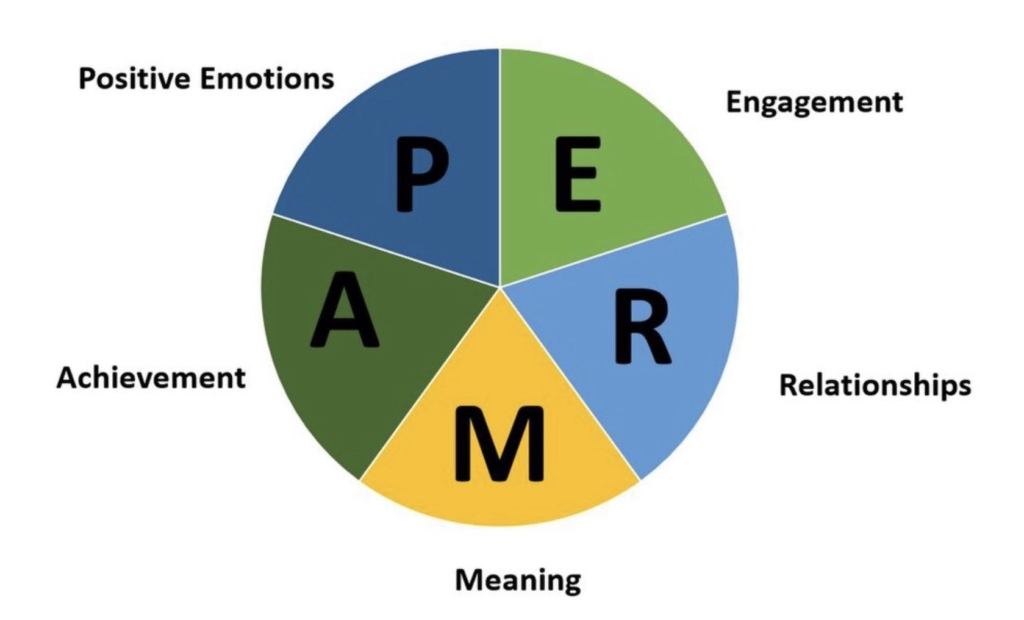
One of the most popular theories of satisfaction is the PERMA model developed by Martin Seligman, one of the “founding fathers” of positive psychology. His model is based on the idea that there are five main factors that contribute to satisfaction:
- positive emotions (like hope, interest, joy, compassion, pride, amusement, and gratitude)
- engagement (being present, doing what you love, and using your strengths)
- relationships (with support, love, and mutual value)
- meaning (sense of purpose)
- accomplishments (realizing goals)
The Psychology of Life Satisfaction: Your Past
Life satisfaction can largely be influenced by chance – the hand you were dealt. But you can decide how to play those cards through a “life review” – a structured review of past experiences that reframes them into a meaningful perspective. For a casual DIY life review, you can consult resources from The Legacy Project.
In the first step of your bucket list journey, you should do a life review on what you’ve already accomplished. Then, give yourself props!
Don’t get frustrated if it takes some time to think of noteworthy milestones. What’s impressive about you is very familiar to you, so it may not stand out at first!
Also consider your…
- Skills
- Adventures
- Pleasurable memories
- Good deeds
- Career developments
- Relationships
- Hobbies/habits
- Travels
- Awards/accolades
- Unique, brave, or sentimental experiences
Tip: ask your loved ones what stands out about you.
If this process causes distress or dysfunction, or even if you’re questioning your need for help, then you may want to do a guided life review with a therapist. One such resource is found in Brooke Lewis, CEO/Owner of View Point Clinical Therapy Services, which has 11 licensed clinicians throughout the Mohawk Valley (17 statewide).
“Life reviews are about that intentional reflective process,” said Brooke.
Check in with your past self by using these bucket list brainstorming prompts…
- What made you happy when you were a kid?
- What have you always thought was really cool?
- When have you felt a sense of passion or purpose?
- What dreams have you given up on?

The Psychology of Life Satisfaction: The Present
Once you know where you’ve been, you can get a clearer picture of who you are.
“Life satisfaction is about aligning your life with your values,” said Brooke.
For help, you can use a couple of free online learning tools to identify your values and character strengths.
Check in with your present self by using these bucket list brainstorming prompts…
- What’s a record you could break?
- Who are you jealous of and why?
- What would be a perfect day for you?
- What fear do you want to overcome?
Tip: Make a copy of your bucket list. Do Arthur Brooks’ “reverse bucket list” exercise. Acknowledge what you want, then cross everything off. Decide that you will be satisfied by wanting less, not accomplishing more. This asks you to crumple up the entire paper, but more realistically, you can just cross things off that don’t actually nourish you. Point being, edit, edit, edit!
The Psychology of Life Satisfaction: Your Future
After you resolve your past and know where you are, you can form your future. To help, View Point also offers Cognitive Behavioral Therapy (CBT), a goal-oriented form of psychotherapy. CBT is a long-standing therapeutic practice that’s becoming more recognized as therapy stigma reduces. CBT shows that therapy is becoming less psychoanalytical and more outcome-driven.
“We want people to feel better as opposed to just understanding why,” said Brooke.
To find the right therapist for you, Brooke recommended that you be active in the intake process. Ask your potential therapist about their experience with the specific problems you’re looking to tackle. Name the kind of support you’re looking for (a listening ear versus a problem-solving mind).
Once you have a cognitive behavioral therapist picked out, you can get help in setting goals that build your life satisfaction.
You may or may not be overwhelmed by the prospect of creating these “worthy” moments, but they don’t have to be stereotypically extraordinary. American poet Andrea Gibson published an article called To Make Snow Angels on a Stranger’s Grave. In it, she said, “A year ago, I wrote what I called A New Kind of Bucket List. It wasn’t an index of wild adventures. It required no bungee jumps, wingsuits, or hot air balloons. Instead, I listed my emotional dreams, goals for my spirit and perspective in this lifetime.” In her first article, she listed many poetic goals like “to sweat through my shirt with nervousness in public and love myself more for it.” In her second article, she celebrated being present for “the little things” and she listed her “biggest tiniest dreams” like “to make out at the drive-in.”

Source: Andrea Gibson, CC0, via Wikimedia Commons
Point being, your bucket list is a subjective, creative exercise meant to nourish yourself, not impress others.
Tip: you can set a focused theme for your list to make it less intimidating – things to learn, places to go, movies to watch, etc.
If you find yourself hung up on impossible goals, then Brooke recommends that you ask yourself, “Why does this matter?”
For example…
Impossible goal: “I want to go to the moon.”
Why this matters to me: “I’ve always marveled at space travel.”
What I can actually do: “Instead, I will buy a moon rock, walk in zero gravity in Florida’s Astronaut Training Experience, and look at the moon through a special telescope at a public observatory.”
Realistically, you can add to your bucket list by setting SMART goals – specific, measurable, achievable, realistic, and time-bound (Falecki et al., 2018).
But you don’t want to discourage yourself!
So, Brooke offered the alternative framework of WOOP goals – wish, outcome, obstacle, and plan. This model is more realistic and less productivity-focused.
“Some of those intimidating words can block someone from even wanting to get started,” said Brooke.
To stay relaxed in this project, remember that your bucket list is a lifelong draft.
Tip: Set up an accountability system. Tell others your plans or involve them – shared goals can boost follow-through and strengthen relationships (PERMA bonus!).
The Story of Your Life

Source: Bonolo Nikita Rankaga, CC0, via Wikimedia Commons
As a final tip, try to give yourself a little *main character* flair – not because others are side characters, but because seeing your life as a story helps you find meaning and coherence. It’s fun and helpful to narrativize your life. Tragedies become interesting plot twists; it’s simply a hurdle to overcome, and you can root for yourself to do so.
Brooke described View Point’s use of narrative therapy to separate the person from the problem and to tell the story of their life in a new way.
“It helps to give meaning to their experiences,” said Brooke.
Brooke expressed that life goes by fast! And it’s not specific to elders to reflect upon the meaning of life along the way.
“Every summer, my kids and I do bucket lists,” said Brooke. “It’s all about intentional living.”
With that in mind, a bucket list is a plot outline that gives you a satisfying conclusion. Because there’s nothing worse than a killer series with a disappointing ending!
Published on May 26, 2026.
About Cheyenne Dorsagno

Cheyenne Dorsagno
Cheyenne Dorsagno believes that every life has stories worth telling. The more focused and “smaller” the story, the more it reflects the universal human experience. This belief shapes her personable writing tone and her deep love for her locality — in and around Utica, NY. Cheyenne writes about people who make their mark (quietly or boldly) on the world around them. A seasoned journalist and Summa Cum Laude English graduate from SUNY Oneonta, she’s devoted to celebrating what makes our short time here matter. You can follow her on LinkedIn or Facebook, and you can learn more about her services as a Legacy Ghostwriter at ourneighborhood.blog.
Cheyenne Dorsagno
Contributing Author
Cheyenne Dorsagno is a wonderfully talented writer and contributing author on Mohawk Valley Today. Cheyenne highlights artists and creatives along with culture and trends that are happening throughout the Mohawk Valley. She brings her positive energy to everything she does.
You can follow Cheyenne on LinkedIn or Facebook, and you can learn more about her services as a Legacy Ghostwriter at ourneighborhood.blog.
Support Mohawk Valley Today!

MVT Updates
 Take a look at our Featured Weekend Events in the Mohawk ValleyOctober 16, 2026 - 8:11 am
- Public Hearing: Town of Otsego Draft Comprehensive PlanOctober 16, 2026 - 7:51 am
- Montgomery County Measles Cases Reported in Montgomery CountyOctober 15, 2026 - 9:58 am


 Montgomery County
 Featured Events
 Old Forge Library Grief Circle























 Fort Plain Museum and Historical Park, Photo by Mohawk Valley Today
 Putman Porch Music at Schoharie Crossing