Conversations About the Planned AI Data Center in Ilion
By Cheyenne Dorsagno
Mohawk Valley Today lent its platform to journalist Cheyenne Dorsagno to facilitate conversations with locals about regional pride and opportunities to advocate for quality-of-life amidst proposed environmental changes.
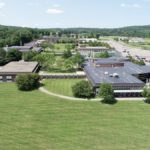
As specified in an earlier Mohawk Valley Today announcement, the former Remington Arms site at 14 Hoefler Ave. in Ilion is slated to become a 250,000-square-foot data center.
This is by the request of Turin Hoefler Avenue LLC, who filed a Brownfield Cleanup Program (BCP) application with the New York Department of Environmental Conservation (Data Center Dynamics). HRP Associates provides environmental consulting on the project.
The water issue…
Data centers pose a number of concerns that are easy to understand. Noise pollution. Air pollution. Higher utility bills. Decreased property value. And minimal long-term job opportunities to boot. But it can be hard to comprehend the impact to one of our most vital necessities while we often take it for granted. What happens to the water?
It really depends on your locality.
Our proposed data center site underwent environmental investigations, finding widespread contamination in the soil with heavy metals like arsenic, lead, and copper at levels above state cleanup standards for commercial use (WKTV). Building over contaminated soil can mobilize these toxins to infiltrate groundwater and nearby water infrastructure. (U.S. Environmental Protection Agency).
Further still, data centers overwhelmingly rely on water for cooling, electricity generation, and material manufacturing (Environmental Law Institute).
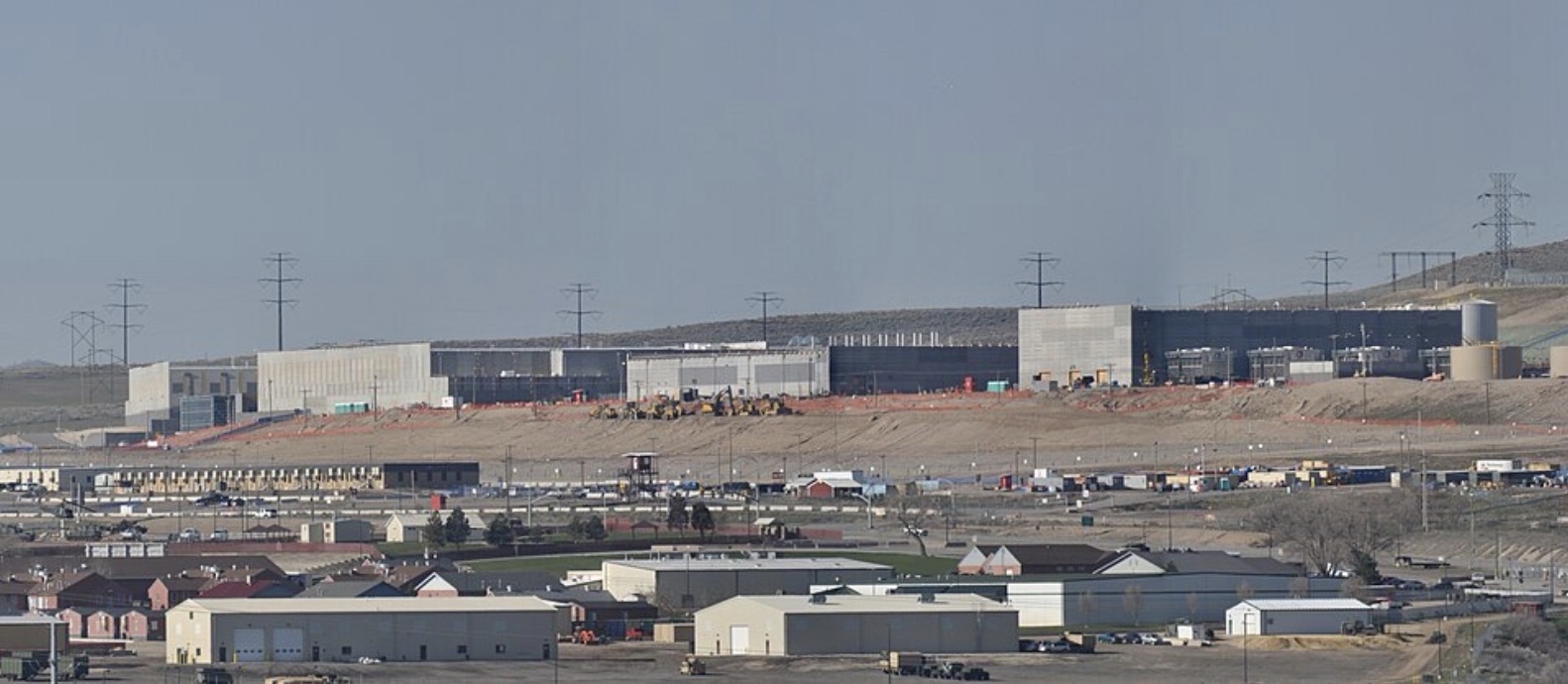
According to the Environmental and Energy Study Institute, large data centers can consume up to 5 million gallons per day (equivalent to the water use of a town populated by 10,000 to 50,000 people).

Source: Herman Gunawan, CC BY-SA 3.0
It may be most illustrative for readers to consider how data centers impact people on an individual level. For example, after a massive Meta data center was built in Newton County, Georgia, residents Beverly and Jeff Morris were left with a barren well, low water pressure, and contaminated water taps at their nearby home (The New York Times).
For the Mohawk Valley region, the concern becomes that an AI data center would turn cool fresh water into warm toxic wastewater that gets dumped into the Mohawk River, disrupting the ecosystem and putting further strain on our ill-equipped water treatment system. A transparent conversation with local professionals would help the public wrap their heads around the potential environmental impacts, but this proposal has been met with fear and contention on both sides.
Colleen Maxwell, Democratic candidate for 118th NYS Assembly, addressed the issue in a Facebook post.
Mike Cecconi, concerned resident of Little Falls, regarded the build as “a disastrous idea.” He said “the damage it could do to a neighboring town I love — it just really frustrates me. And my father worked at Remington, so I am particularly aware of the existing pollution on the site.” He elaborated:
“… Virtually all environmental studies on AI data centers make clear that they are heavy polluters and, even more disturbingly, [a] massive strain on the local water infrastructure. As bad as such a business would be anywhere, it feels like Ilion would be the worst place to put it, when you consider the nearly constant water main breaks in Ilion the last few years. If AI data centers must exist, they still should not be in a community like Ilion with such a fragile, crumbling, underfunded water infrastructure. Perhaps in an area rich enough to absorb that infrastructure strain, like Saratoga or the Hamptons or Beverly Hills or Maralago.”
Of course, there’s a trade-off for everything, but when is it worthwhile?
Michele Hummel, concerned resident of Ilion, shared her perspective: “I’m not opposed to technology, innovation, or economic development at all. In fact, I think Ilion needs investment and opportunity. What we really need, however, is meaningful job creation that benefits the people who live here. [And] I think it may dissuade other economic development projects, rather than attract them. Would the county be willing to build the proposed childcare center next to an AI data center, for example? If the answer is no, that may be a strong indication of how the project is perceived by decision-makers themselves.”
It is important to keep in mind that the same resource demands and other qualities that perturb residents living near data centers also impact nearby businesses (The Harvard Gazette). Where a data center is placed is a strategic decision.
“Across the country, there’s a noticeable trend of data centers seeking communities like ours with available electrical infrastructure,” said Michele. “[Communities that are] eager for economic development and [have] local governments that are willing to offer incentives and expedite approvals.”
So, the Mohawk Valley doesn’t need to rush into this transformation desperately and blindly. Local representatives can find other communities that have been in a similar position to learn their perspective (with hindsight).
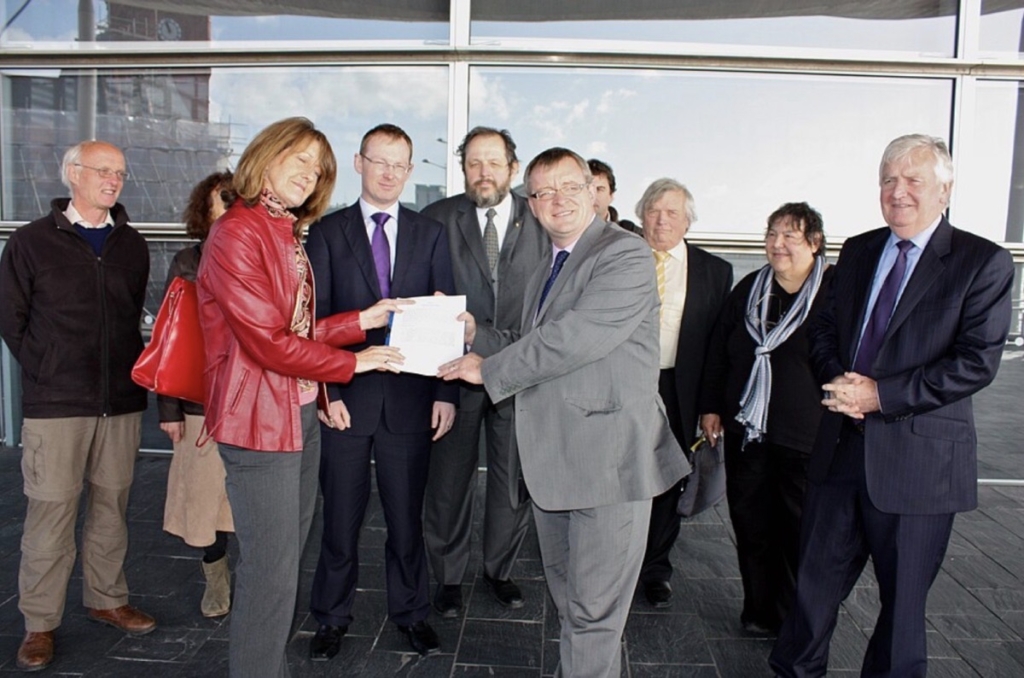
, via Wikimedia Commons” width=”1024″ height=”678″ /> Source: National Assembly for Wales from Wales, CC BY 2.0
Hold up…
To facilitate further consideration, on June 5, 2026, the New York State Legislature passed the first-ever one-year moratorium on the permitting and construction of new large-scale data centers – the Responsible Data Center Development Act. This was with great support – a Senate vote of 44 to 16 and an Assembly vote of 102 to 39 (Spectrum Local News).
While the moratorium may inspire a sigh of relief, it shouldn’t placate anyone; instead, it should be a rallying cry for people to prepare for the future they want to see.
“One year is no time at all,” said Michele.
The question becomes, what do us little people do to have our voices heard?
“Simply speak out,” said Michele. “And I’m not talking about doing it on Facebook. I’m talking about reaching out to your elected officials and having conversations. Not arguing. Not trying to be a keyboard warrior. Just trying to have an educated conversation.”
The Mohawk Valley offers a variety of opportunities for locals to advocate in whatever way they’re comfortable.
If it reflects your position on the cause, then you can sign the petition “Oppose Large-Scale AI Data Center Development in the Mohawk Valley.” Or, you can attend the upcoming protest on June 27.
To share your opinion with your representative, visit your county’s official government website and go to the “Legislature” or “Board of Legislators” page to locate a phone number.
“Our [county] legislators don’t have somebody [else] pick up the phone,” said Michele. “Pick up the phone and call them directly.”
Also on your local government website, you can consult a schedule for an open meeting.
“The only way to really get an accurate depiction is if you’re there in person,” said Michele.
You may even be able to find a link to a live stream of the meetings. In the least, you can read minutes from meetings you cannot attend.
Naturally, we have to consider every side of the issue. But this isn’t a partisan issue. And support for or against data centers in your locality is viewed as separate from support for or against AI; therefore, it’s not rife with the same controversy. And lastly, throughout Michele’s many open conversations, she hasn’t met anyone who’s a proponent of the data center outside of the Herkimer County Industrial Development Agency (IDA) and the Herkimer County legislature. So, Michele speculated on their stake in the matter…
“A data center in town is going to bring an influx of cash,” said Michele. “[But] economic development works best when it happens with the community and not around the community.”
Michele concluded with a call to action.
“We’ve got to put the civics back into Herkimer County,” said Michele.
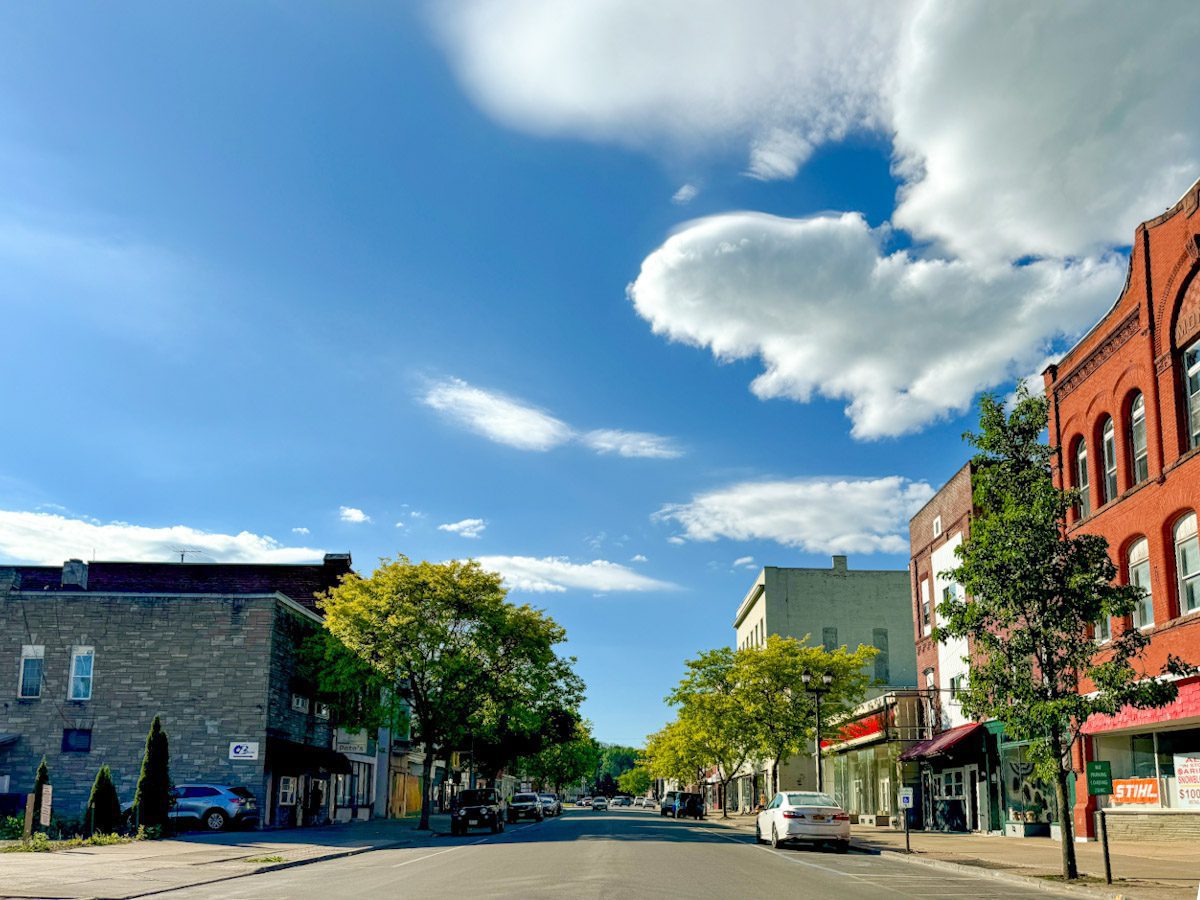
At the time of publishing this article, a response hadn’t yet been received from Turin Hoefler Avenue LLC nor HRP Associates.
Published on June 16, 2026.
About Cheyenne Dorsagno

Cheyenne Dorsagno
Cheyenne Dorsagno believes that every life has stories worth telling. The more focused and “smaller” the story, the more it reflects the universal human experience. This belief shapes her personable writing tone and her deep love for her locality — in and around Utica, NY. Cheyenne writes about people who make their mark (quietly or boldly) on the world around them. A seasoned journalist and Summa Cum Laude English graduate from SUNY Oneonta, she’s devoted to celebrating what makes our short time here matter. You can follow her on LinkedIn or Facebook, and you can learn more about her services as a Legacy Ghostwriter at ourneighborhood.blog.
Support Mohawk Valley Today!

MVT Updates
 Take a look at our Featured Weekend Events in the Mohawk ValleyOctober 16, 2026 - 8:11 am
- Public Hearing: Town of Otsego Draft Comprehensive PlanOctober 16, 2026 - 7:51 am
- Montgomery County Measles Cases Reported in Montgomery CountyOctober 15, 2026 - 9:58 am


 Montgomery County
 Featured Events
 Old Forge Library Grief Circle